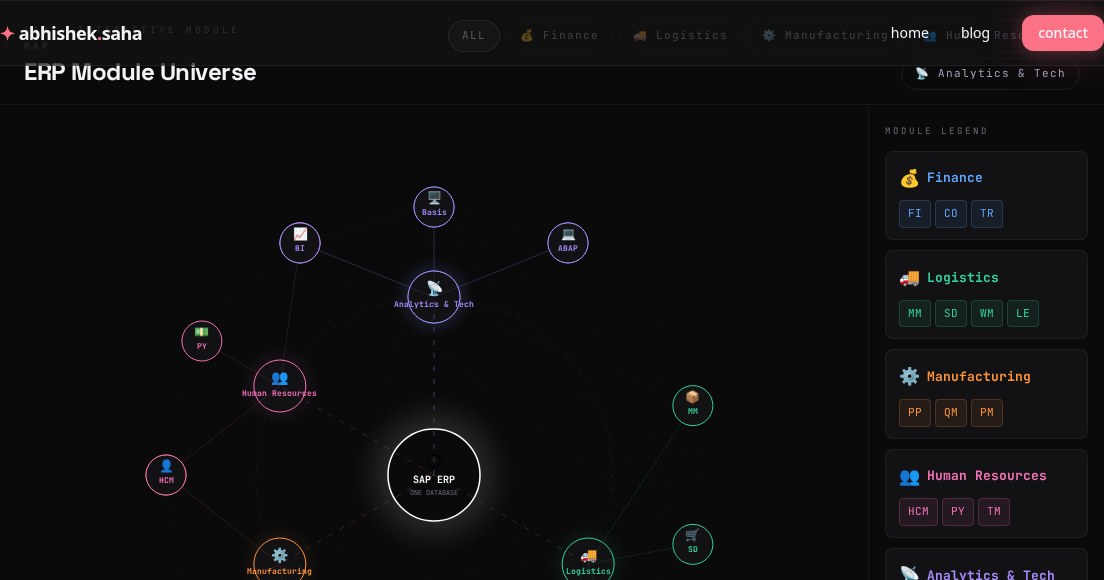
Enterprise Master Data Cleaning: The Business Case for SAP Supplier Data
Why dirty vendor master data quietly costs enterprises millions, how AI helps, and the operating model that makes it safe. Part 1 of the series, for business and leadership.
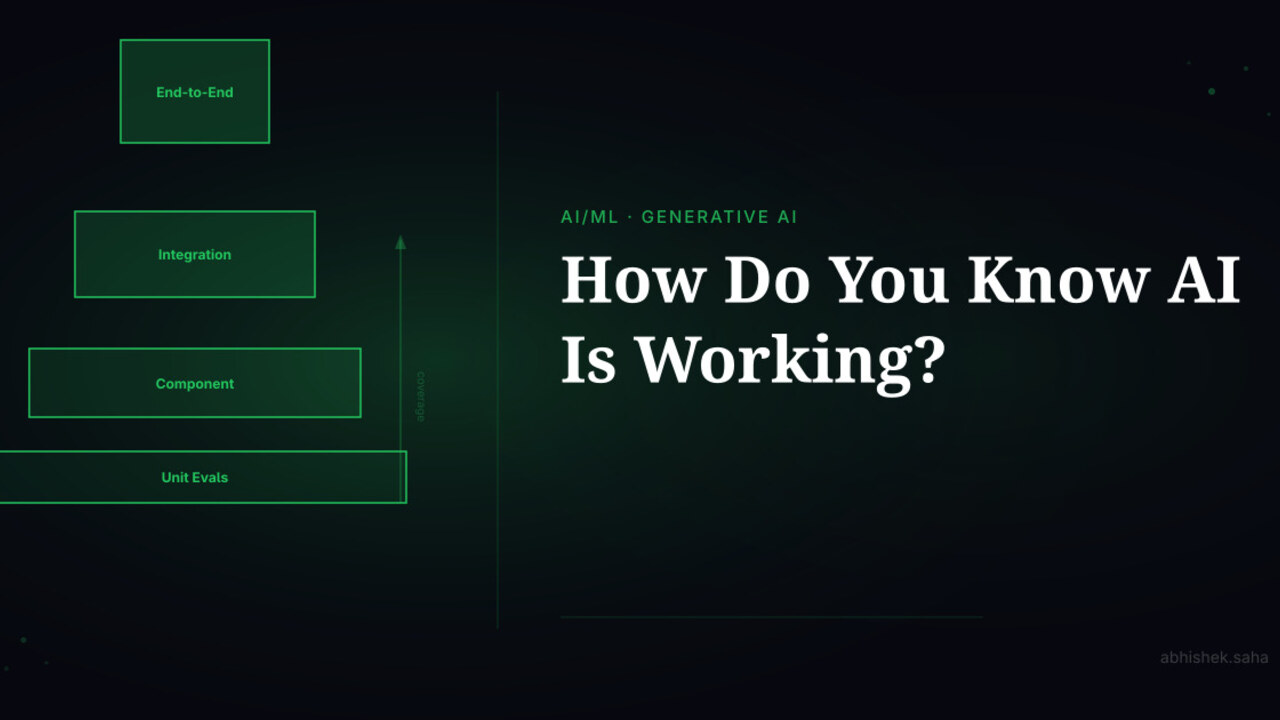
Demos always look good. Production AI degrades silently. Here's the evaluation framework — from exact match to human review — and how to catch hallucinations.
Embeddings & Vector Databases — The Memory Layer of AI
How neural networks encode meaning as numbers, why similar things end up close in vector space, and what databases like Pinecone and pgvector actually do.
Five techniques that cover 95% of real-world prompt engineering. Zero-shot, few-shot, role prompting, chain-of-thought, and structured output — with before/after examples.
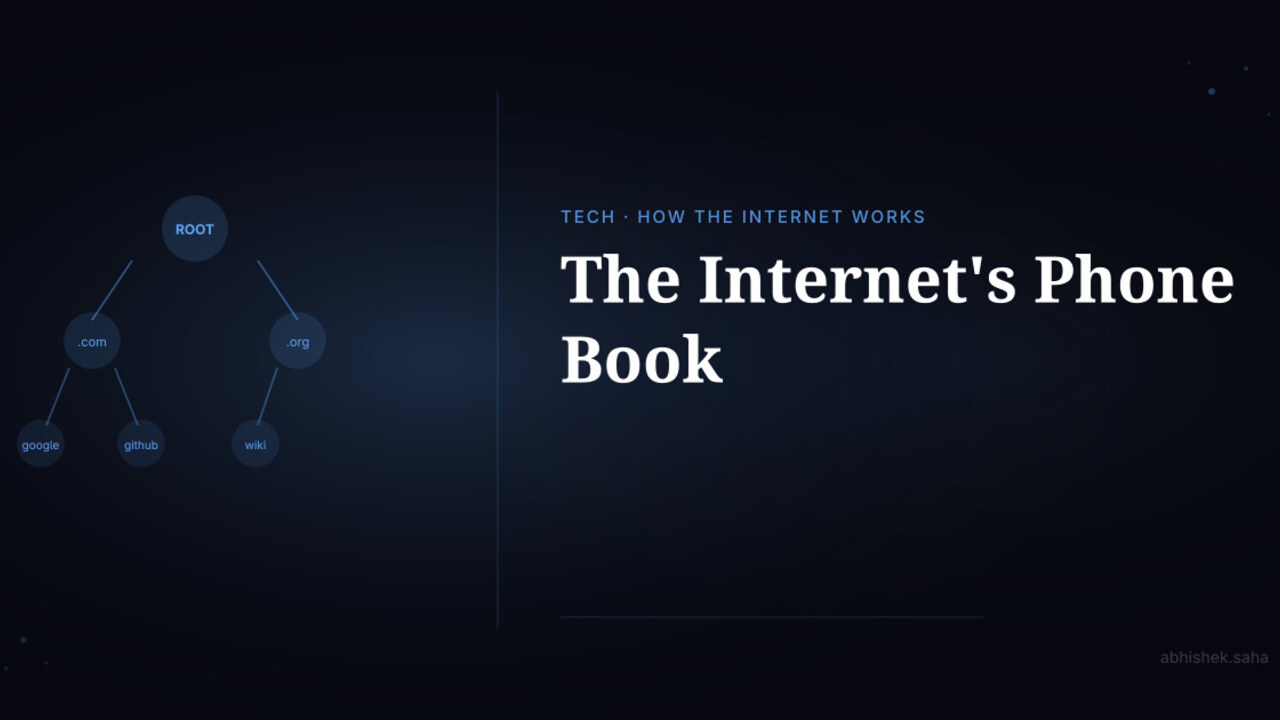
You type google.com. Your browser stares at it blankly — it has no idea where that is. Here's how the internet turns a name into an address, and why it's faster than you'd expect.
AI sometimes states false things with complete confidence — fake citations, wrong numbers, invented APIs. This is hallucination. Here's why it happens and how to catch it.
The TLS tunnel is open. Now your browser and server need to speak the same language. Here's what GET, POST, 404, and 200 actually mean — and what really travels across the wire.
HTTP/1.1 can only send one request at a time. A modern page needs 50+ files. HTTP/2 loads everything at once over a single connection — here's how multiplexing actually works.
You type a URL and press Enter. 200 milliseconds later, a page appears. Here's every single step that happened in between — from DNS lookup to browser paint.
Every time a developer deploys files to a server or downloads logs, SFTP is often involved. Here's how it differs from FTP, how the SSH tunnel works, and when to use it.
You have an IP address. Before a single byte of data flows, TCP performs a secret handshake and establishes a guarantee: nothing will be lost. Here's how it works.
Your TCP connection is open. But right now, it's a naked wire — every router between you and the server can read everything. Here's what TLS does, how the handshake works, and what that padlock actually means.
HTTP is always ask-then-answer. WebSockets open a permanent channel where server and client talk freely — no polling, no waiting. Here's how chat apps, live feeds, and multiplayer games actually work.
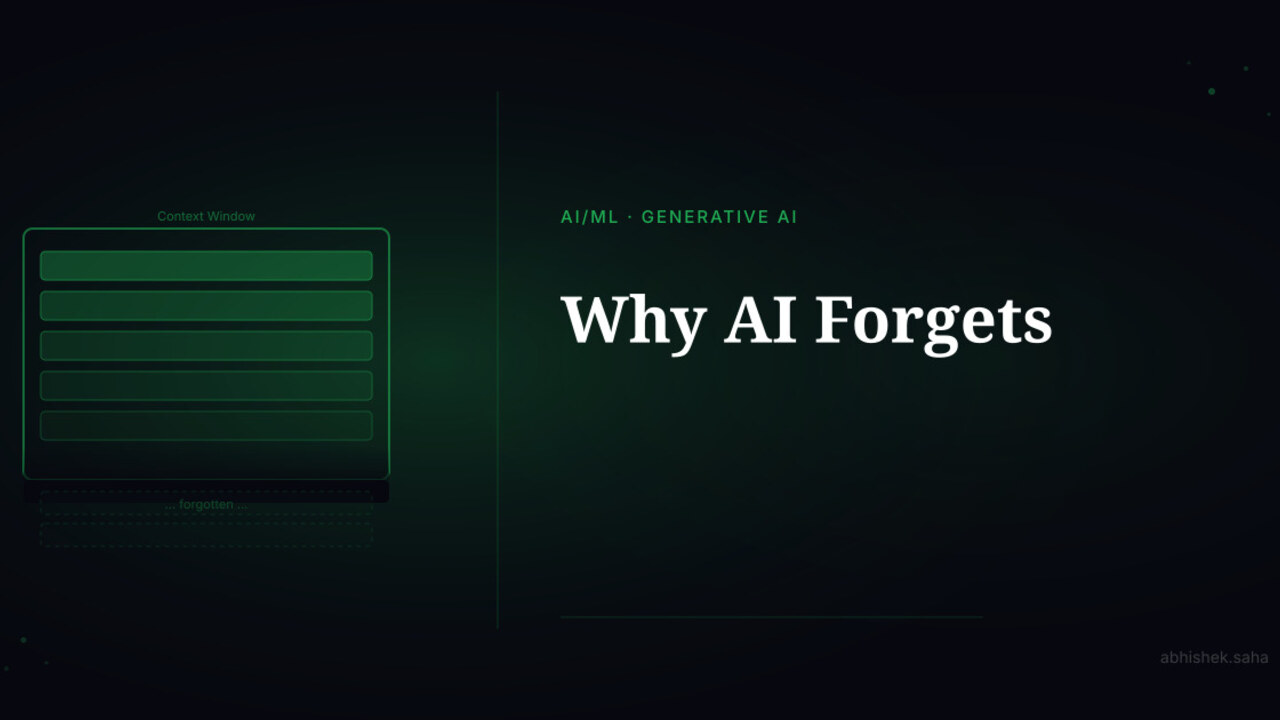
Mid-conversation, AI suddenly doesn't remember what you said earlier. This isn't a bug — it's the context window. Here's how it works and how to work around it.
AI doesn't read letters or words — it reads tokens. This small detail explains why AI costs money, why it stumbles on names, and why non-English is more expensive.
You type a message. Half a second later, AI replies. Here's every single step that happens in between — from your first letter to the model's last word.
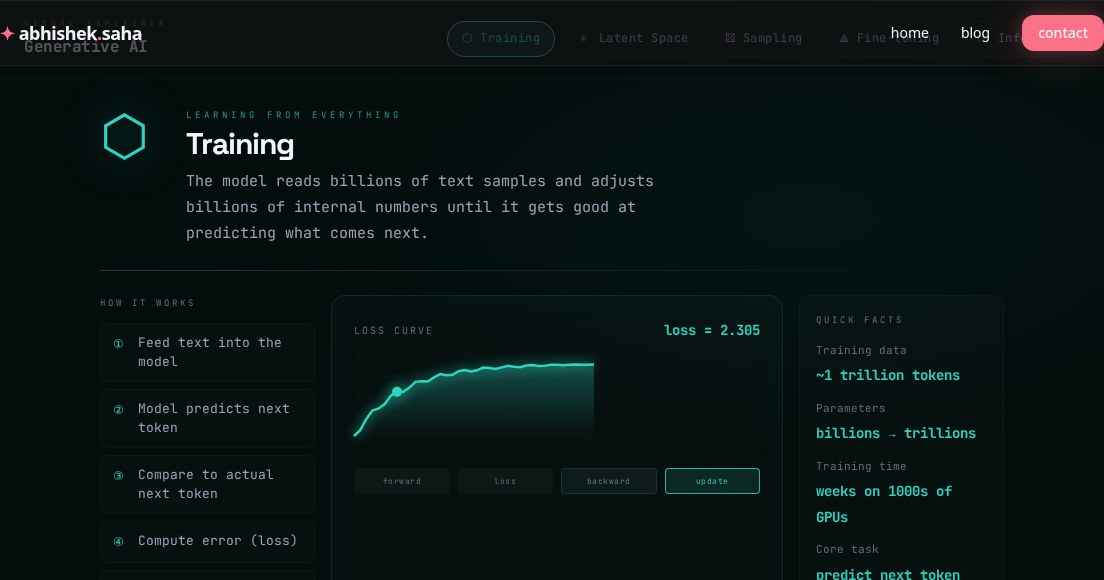
Training, inference, sampling, fine-tuning — these words are everywhere. Here's what they actually mean, with live visualizations and honest analogies.